Journal · Bear Mountain
What Endures
Anoop Brar
·
July 2026
·
8 min read
We recently sold our Navigator residence on Bear Mountain for over $2.6 million — a record price in today's bear market. If you only saw the headline, you might assume it was a quick win in a hot pocket of the market.
It wasn't. The house sat on the market for a year and a half. This is the story of those eighteen months — and the lessons about conviction, design, and wealth that we're carrying into everything MOVA builds next.
The Wait
Over those eighteen months, the market moved against us. Homes around us sold for 25% less — and every one of those sales made us question ourselves. Showings would surge, then go quiet. Lowball offers came and went. Some buyers tried to write design changes into the deal before they'd commit. And with every quiet stretch came the same advice from people who meant well: drop the price, meet the market, move on.
I won't dress this up. The mortgage came out every month whether anyone showed up or not. The debt kept piling. We cleaned the house top to bottom before every showing, and most of them went nowhere. It's discouraging in a way that's hard to explain unless you've carried something like that — the slow arithmetic of carrying costs against a phone that isn't ringing.
We didn't drop the price, and we didn't touch the design. Here's why.
Why We Held
We knew what we had built, because we had agonized over every inch of it.
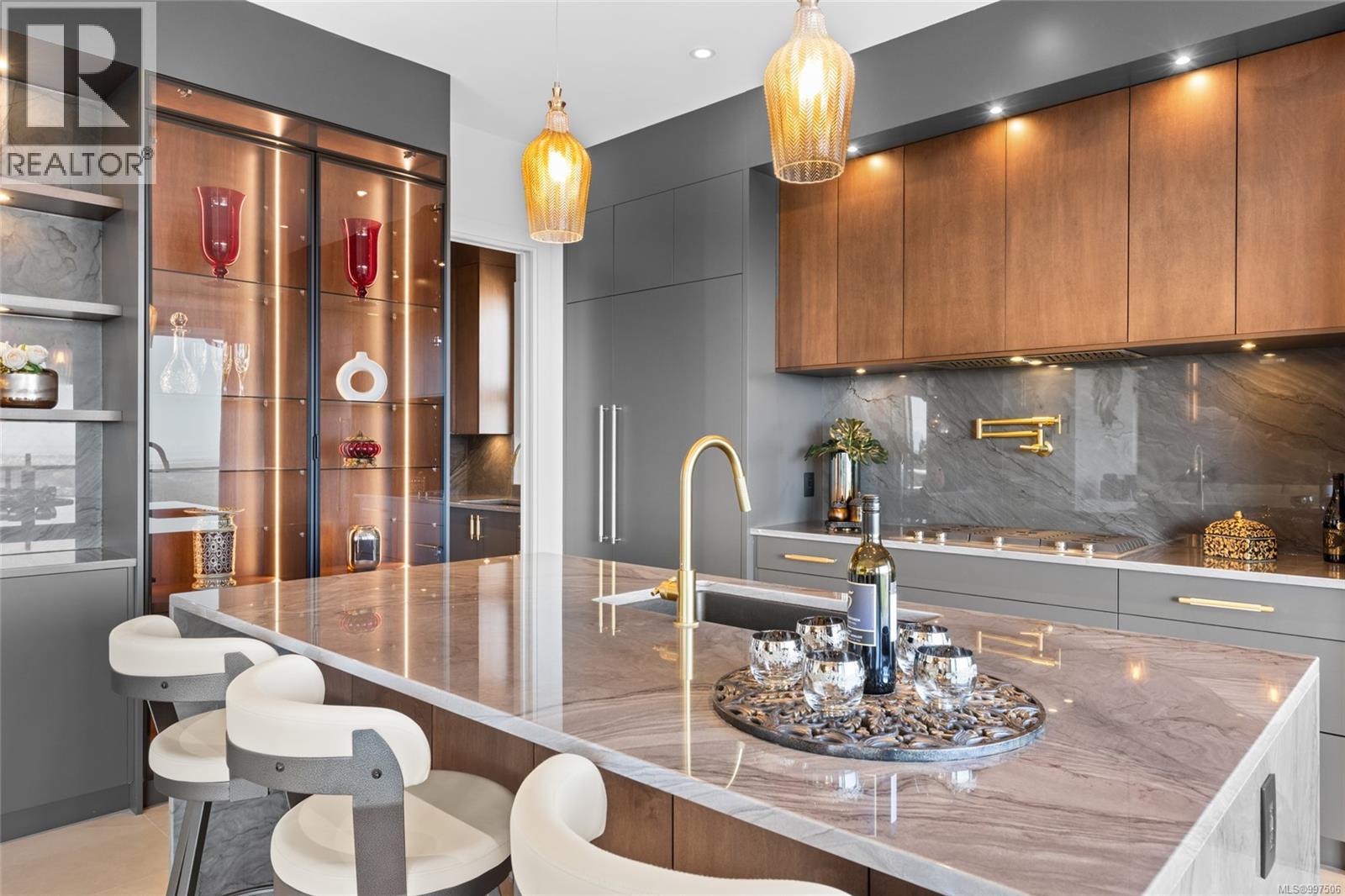
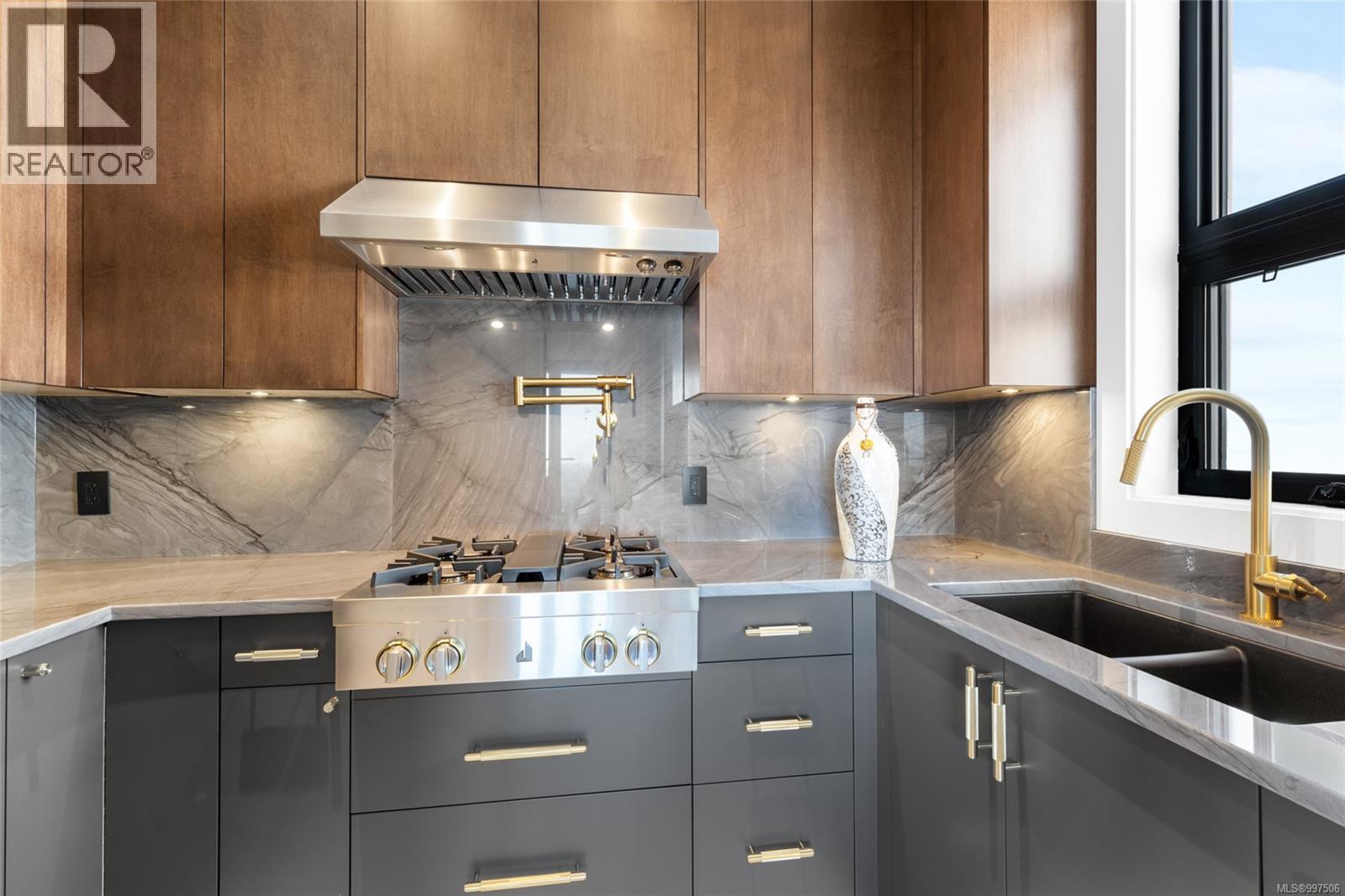
The great room rises two storeys, glass across the whole ocean side, so the view isn't a feature of the house — it's the material the house is made of. A stone-clad fireplace climbs the full height of the space, flanked by fluted wood panelling that catches the evening light. In the kitchen, walnut and charcoal wrap around a dramatically veined stone island, with gold fixtures throughout — the faucet, the pot filler, the cabinet pulls — warm metal set against cool stone.
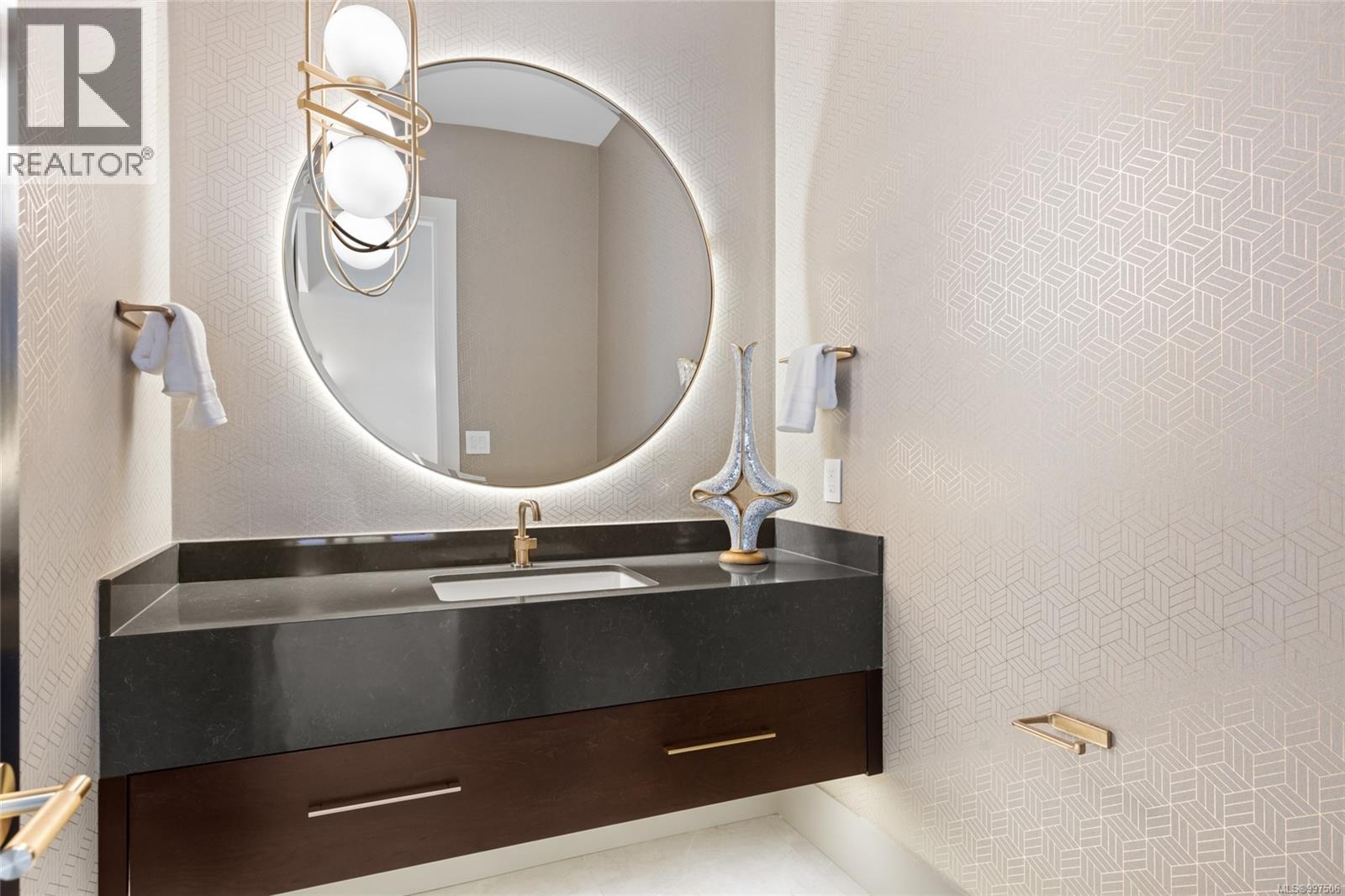
Then the decisions most people would never think to make. Black interior doors — every one of them — with knurled brass handles you feel in your hand each time you open one. Tinted glass railings so nothing interrupts the view. Heated tile underfoot. Ambient LED lighting layered into ceilings and millwork, tuned for the evenings, because that's when the house comes alive. A palette of warm neutrals, charcoal, natural wood and stone, chosen so the home would feel current in year one and correct in year twenty.
We put hundreds of hours into colours, materials and light that no one consciously notices but everyone feels. Walk through a home built that way, and every other house you see afterwards feels slightly off. That's what we were pricing for. Not square footage.
We weren't defending a price. We were defending a standard.
Design Is a Leadership Decision
People treat design as decoration — the thing you layer on at the end. It isn't. Design is a chain of decisions made years before anyone can validate them, each one costing real money, with no guarantee the market will pay for the difference. Choosing black doors and knurled brass when beige and builder-grade would appraise the same: that's not taste, that's leadership. You're deciding what the standard is when no one is watching and no one is paying you for it yet.
That's also why design can't be negotiated away at the end. The buyers who asked us to change the design before committing were asking us to un-make the very thing that gave the house its value. You can't add soul at staging, and you can't subtract it as a concession. It's either in the walls or it isn't.
What the Market Can't Price
Markets are excellent at pricing commodities. Put ten similar homes on a street and the spreadsheet will tell you what each is worth, almost to the dollar.
But markets struggle with the singular. When something is genuinely differentiated — in design, in material quality, in the coherence of a thousand small decisions — the neighbourhood discount stops applying. The buyer who ultimately purchased Navigator didn't negotiate against the comps. They recognized what they were standing in, and they paid for it. In a bear market. At a record.
There's a wealth lesson buried in that. Real wealth isn't built by selling into every dip or marking your work to whatever the panic of the moment says it's worth. It's built by owning things whose value you understand better than the market does — and having the strength to hold them long enough for the market to catch up. Liquidity is a convenience. Conviction is an asset.
The Mindset of Month Fourteen
I won't pretend we felt confident the whole way. We didn't. There were months where holding felt less like conviction and more like delusion — and if you're building anything, a company, a product, a home, you know that feeling. The two look identical from the inside. The only difference is whether the work underneath holds up.
Nobody writes about month fourteen. The launch gets celebrated and the sale gets announced, but the long quiet middle — where the costs compound, the doubts sharpen, and holding on looks like foolishness to everyone around you — that's where the outcome is actually decided. Most people fold there. Not because they're wrong, but because being right slowly is one of the loneliest positions in business.
A few truths we're keeping from that stretch:
Conviction is earned before it's tested. If we had cut corners in the build, holding firm on price would have been arrogance. Because we didn't, it was discipline. Do the work first; the right to believe comes after.
Belief has a carrying cost. Everyone loves conviction in the abstract. Fewer people love it when the mortgage clears and the phone is quiet. Perseverance is just conviction that has learned to pay its bills.
Price your values, not your fear. The moment you discount your work to relieve your own anxiety, you've told the world what it's really worth — and the world takes you at your word.
And yes — sometimes you have to be a little delusional. From the inside, vision and delusion feel exactly the same. The only difference is the substance behind them. If the work is real, what looks like delusion today reads as foresight tomorrow. That's the leap every entrepreneur eventually has to take.
Perseverance is just conviction that has learned to pay its bills.
What Endures
At MOVA, our promise is simple: we build what endures. Navigator was that promise in built form — and this sale was the market, eventually, agreeing with us.
We're carrying the same standard into everything we're building next across Greater Victoria. Because the lesson of Navigator isn't that we got lucky. It's that quality, held with conviction, gets recognized.
Sometimes it just takes eighteen months.