There are two ways to make money developing an apartment building. You can build it and sell it, capturing the development margin at completion. Or you can build it and hold it, capturing the income and appreciation over the years that follow. Most of the industry does the first. MOVA does the second — and the reason is not sentiment. It is arithmetic.
The build-to-sell model has an obvious appeal: the profit is fast, legible, and realised the day the building trades. But that profit carries a cost most developers quietly absorb and rarely name. It is the cost of the exit itself.
What the exit actually costs
Selling a completed building is not free. A disposition carries real, recurring frictions that compound every time a developer cycles capital:
- Transaction costs — brokerage, legal, and closing costs that can consume 2–4% of the asset's value on the way out, and again on the developer's next acquisition on the way back in.
- Tax on the gain — the development profit is crystallised and taxed at sale, rather than deferred and compounded inside a held asset.
- Reinvestment risk — capital returned at the exit must be redeployed into the next deal, at whatever prices and rates the market offers that year. The seller trades a known asset for an unknown one.
- The margin ceiling — a sale caps the return at the development spread. Whatever the building earns over the following twenty years accrues to the buyer, not the builder.
A sale caps your return at the development margin. Everything the building earns afterward belongs to someone else.
The case study we own
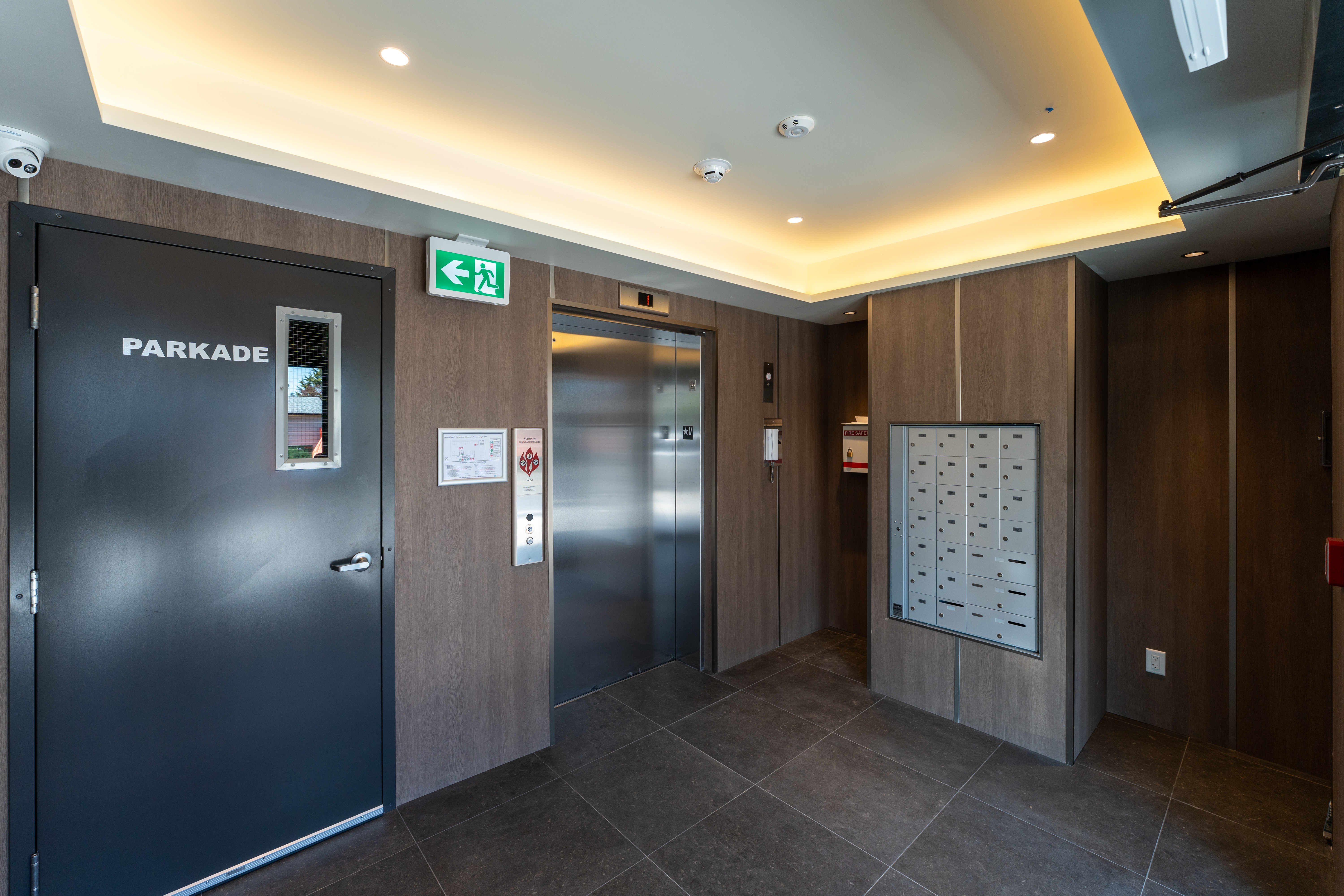
The Arncote is a completed 21-suite rental building in downtown Langford. We designed it, built it, and — unlike most of the industry — kept it. It has been 100% occupied since completion.
Had we sold it at stabilisation, we would have booked a development profit and moved on. Instead, we hold an asset whose stabilised yield-on-cost now runs meaningfully above what we underwrote, financed with CMHC-insured debt at favourable long-amortisation terms. The rents have grown. The debt is being paid down by the residents. And the appreciation — the part a seller hands to the buyer — is ours.
None of this is exotic. It is the ordinary result of not selling. The build-to-sell developer and the build-to-hold developer construct the same building; they simply keep different amounts of what it produces.
Why hold changes the building itself
The most underappreciated consequence of the hold model is that it changes the building before a single resident moves in. When you know you will own an asset for two decades, you specify materials for how they age, not how they show on delivery day. You design layouts for retention, because every departing resident is a turnover cost you personally absorb. You choose the mechanical systems you will be maintaining, not the cheapest ones that pass inspection.
A build-to-sell developer has every incentive to optimise for the appraisal and the closing. A build-to-hold owner optimises for year fifteen. Those are different buildings, and residents can feel the difference — which is precisely why the held building commands the rents and the occupancy that make holding worthwhile. The strategy and the product reinforce each other.
The honest caveat
Holding is not free of cost either. It demands patience, an operating capability most developers do not have, and capital partners who measure returns in years rather than quarters. It forgoes the fast, clean profit of the sale. For a developer who needs to recycle capital quickly, or who cannot operate what they build, build-to-sell is the rational choice.
But for an investor who can think in decades — and who wants the appreciation, the compounding income, and the tax deferral that the seller gives away — the hidden cost of the exit is the strongest argument there is for never taking it. We built the Arncote to keep it. Everything it earns from here is the reason why.