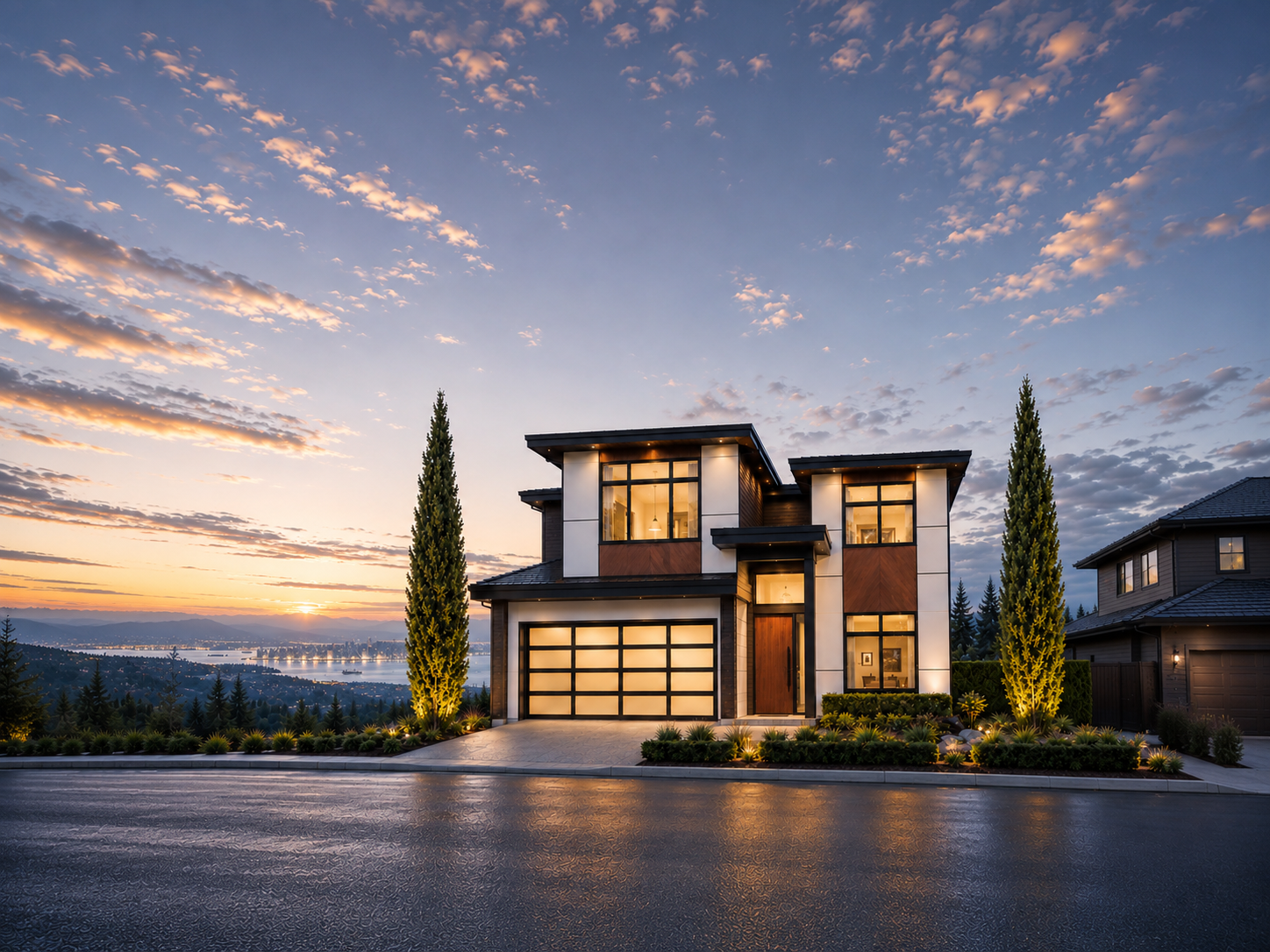
In a market where every developer has access to the same land, the same contractors, and roughly the same financing, design is one of the few advantages that cannot be bought off a shelf. It is how a building becomes distinguishable from the one across the street — and in real estate, distinguishable is a financial condition, not an aesthetic one.
Most developers treat design as a cost to be minimised. MOVA treats it as the cheapest competitive advantage available, because a design decision is made once and pays out for the life of the building. The rent premium, the faster lease-up, the lower turnover — they all trace back to choices made on paper, long before anyone moved in.
Difference is defensible; sameness is not
Commodity buildings compete on one axis: price. When your building looks like every other building, the only reason a resident chooses yours is that it is cheaper — and the only lever you have in a soft market is to cut rent. Differentiation breaks that trap. A building that is visibly better, that feels considered, that offers something the one down the block does not, competes on desirability instead of discount.
That difference does not require extravagance. It requires intention — proportion that feels right, materials that feel honest, light that falls well, details that reward a second look. These are not expensive relative to the cost of a building. They are, however, rare, because they demand judgment rather than budget.
When your building looks like everyone's, your only lever is price. Design is how you stop competing on discount.
Material selection is where quality becomes visible
People cannot always articulate why a space feels premium, but they feel it instantly — and most of that feeling is material. The warmth of real wood underfoot, the weight of a solid door, the cool of stone on a counter, the quiet of a well-built wall. Materials are the vocabulary of quality, and they are the first thing a prospective resident's senses register on a tour.
Because we hold our buildings, we choose materials on two axes at once: how they feel on day one, and how they age over the years we will own them. White oak, honed stone, matte black hardware, warm timber — these are chosen not because they are trendy but because they improve, or at least endure, rather than degrade. A material that ages into character is an asset. A material that ages into wear is a liability with a delayed invoice.
Innovation is solving the resident's real problem
Design innovation in housing is rarely about spectacle. It is about noticing what actually shapes daily life and solving for it: storage that is where people need it, acoustic separation that lets neighbours coexist, natural light in the rooms where people spend their mornings, amenities residents genuinely use rather than ones that photograph well for the brochure. Innovation is empathy made concrete — designing from how people actually live, not how a floor plan looks from above.
Aesthetics are an economic argument
It is tempting to treat beauty as a luxury and function as the necessity. In housing held for the long term, that division is false. A beautiful building leases faster, commands higher rent, retains residents longer, and requires less marketing to fill. Every one of those is a line on the income statement. Aesthetics, properly understood, are not the opposite of financial discipline — they are one of its instruments.
This is why design sits at the centre of how MOVA underwrites, not at the edge of how we decorate. A better-designed building is a better-performing asset, and a better-performing asset is worth more. The difference a resident feels on a tour and the difference an investor sees on a valuation are the same difference, measured in two different units.
Design is the signature that separates a MOVA building from the commodity beside it. It costs judgment more than money, it is decided early and paid out for decades, and it is one of the only advantages in this business that a competitor cannot simply outbid you for. That is why we lead with it.