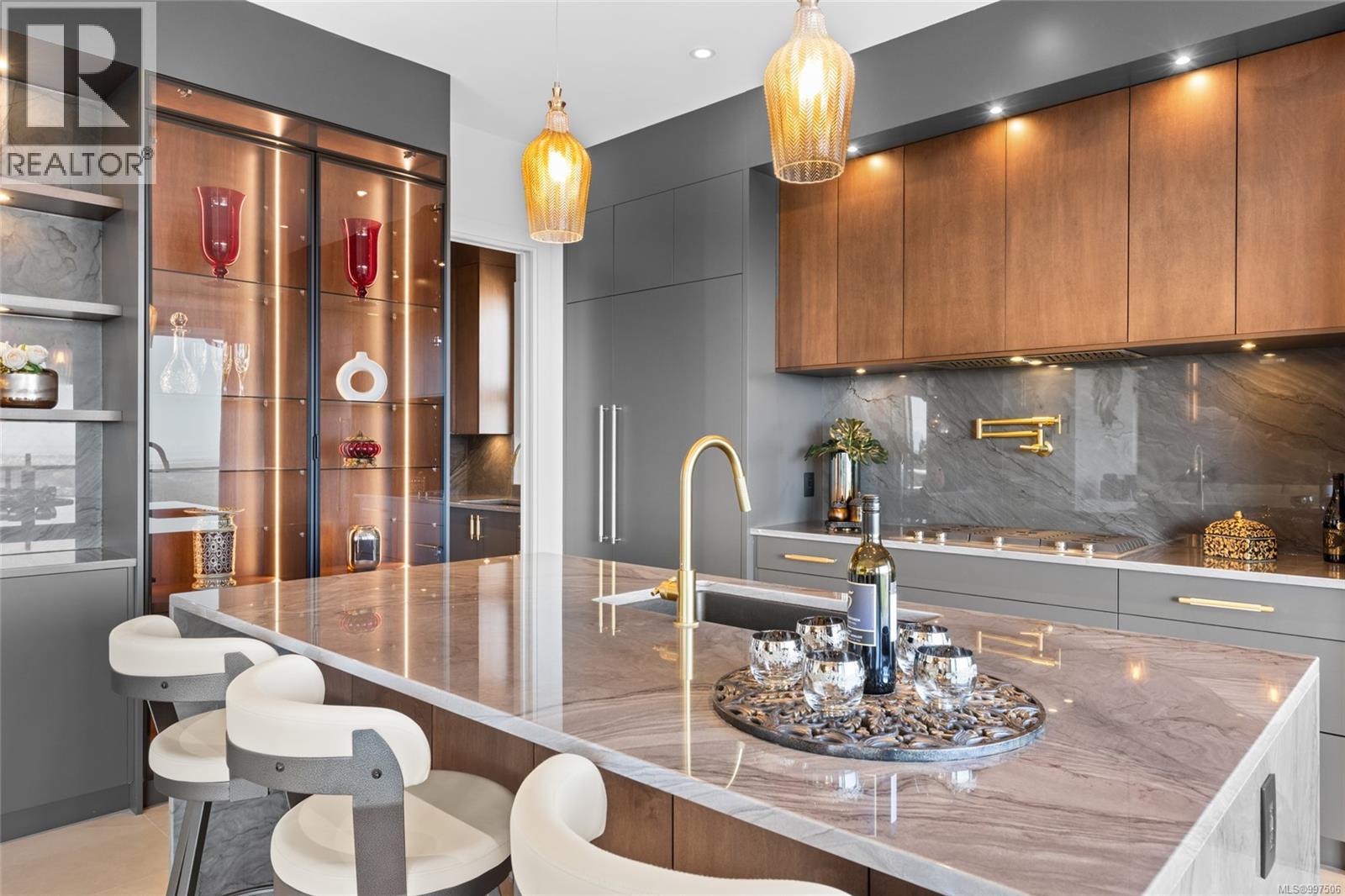
In a purpose-built rental building, a material choice is not a taste decision. It is a capital decision amortised over decades and hundreds of tenancies. The developer who plans to sell can afford to think about how a surface photographs on delivery day. The developer who plans to hold has to think about how it looks after the fortieth tenant. Those two questions have different answers, and white oak is one of the clearest.
The problem with materials that only look new
Most rental interiors are built from materials that have exactly one good day: the day they are installed. High-gloss laminate, painted MDF, printed vinyl plank — they photograph well when new and degrade visibly with use. Every scuff is permanent. Every chip announces itself. Within a few tenancies the surface no longer reads as "worn in"; it reads as "worn out," and the building starts to feel cheaper than it is.
The cost of that is not aesthetic. It is financial. A surface that looks tired depresses the rent a prospective resident will pay, lengthens the vacancy between tenancies, and eventually forces a replacement cycle the owner pays for out of returns. The cheap material was never actually cheap. It was a deferred expense with a short fuse.
The cheapest material is rarely the least expensive. It is a deferred cost with a short fuse.
What white oak does differently
White oak belongs to a small category of materials that improve with age rather than merely surviving it. Several properties make it uniquely suited to a building meant to be held:
- It hides wear instead of displaying it. The open grain and mid-tone colour absorb the small dents and scratches of daily life into character, rather than broadcasting them as damage.
- It can be refinished, not just replaced. A solid or engineered oak floor can be sanded and re-sealed across a hold period, resetting its life at a fraction of replacement cost. A vinyl floor has no second act.
- It is tonally durable. Oak has sat comfortably in interiors for centuries and is not tied to a five-year trend cycle. A building finished in oak does not read as dated the way one finished in the finish-of-the-moment inevitably will.
- It reads as quality instantly. Residents cannot always name why a suite feels considered, but they feel the warmth of real wood underfoot and at the hand — and they pay for it.
The math a long-term owner runs
Consider the decision at the scale of a single unit. Specifying oak millwork and flooring over the builder-grade alternative might add a few thousand dollars to the cost of a suite. If that better finish supports even a modest rent premium and defers one replacement cycle across a twenty-year hold, it returns its cost many times over — in rent captured, vacancy avoided, and capital expenditure deferred.
Run that across every suite in a 75-unit building and the material decision stops being a line item and becomes a strategy. This is why oak runs through every MOVA project, from a private residence on Bear Mountain to the multifamily interiors that follow: it is the material that makes the building worth returning to, and it is the material a long-term owner can afford precisely because they are not selling.
Design is not decoration. It is asset strategy expressed in a material. White oak is what that sentence looks like on a floor.