Construction draw management is one of the most consequential disciplines in multifamily development, and one of the least discussed. It rarely appears in a pitch deck. Yet it is where investor capital is most exposed, and where the difference between a disciplined developer and a hopeful one becomes measurable to the dollar.
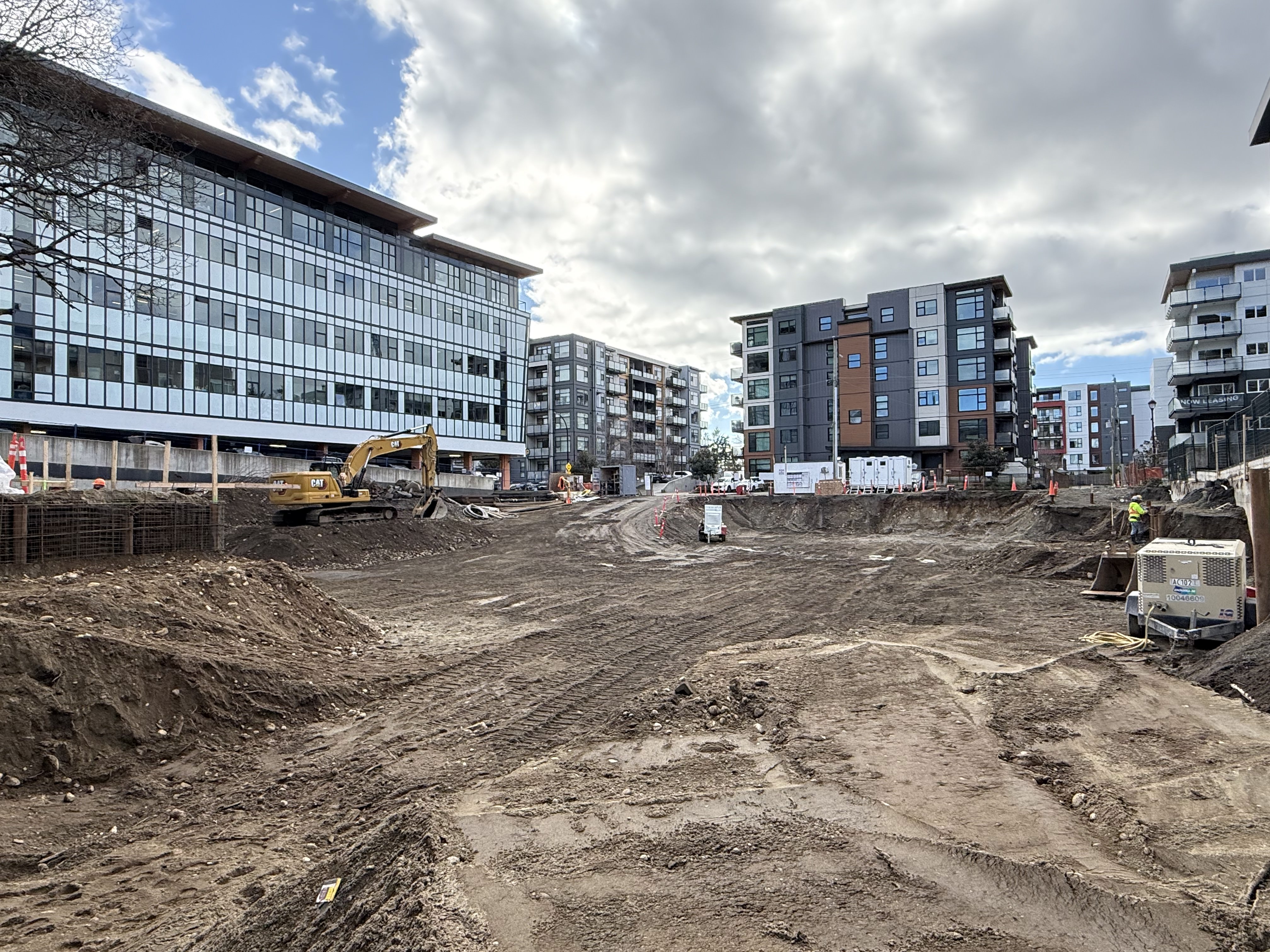
The Hockley is a 75-suite, six-storey purpose-built rental community under construction in Langford, BC, financed under CMHC MLI Select. Its construction budget runs to roughly $40 million, released not as a lump sum but across eighteen draws — staged payments advanced by the lender as work is completed and verified. As of this writing we are at Draw 5 of 18, on schedule. Here is how we think about the machinery that gets us from here to occupancy.
A draw is a claim, not a request
Every draw begins as a claim: the general contractor asserts that a defined amount of work has been completed and is owed. The instinct of an inexperienced owner is to treat that claim as an invoice to be paid. The discipline is to treat it as a claim to be proven.
Before a dollar moves, the work is verified against three independent references: the schedule of values agreed at the outset, the physical condition on site, and the quantity surveyor's certification. When those three agree, the draw is real. When they diverge — when the claim runs ahead of the physical work — that gap is the earliest warning signal a project ever gives you. Catching it at Draw 5 costs a conversation. Catching it at Draw 15 costs the project.
The gap between what is claimed and what is built is the earliest warning a project ever gives you.
What we actually track
Draw certification is not a single number. On the Hockley, each draw is reconciled across several dimensions before we approve it:
- Percentage complete by trade — not the building as a whole, but each trade against its own budget, because a project that is 30% complete overall can hide a framing package that is running hot.
- Holdback compliance — the statutory builders-lien holdback retained on every payment, which protects against subcontractor claims and is non-negotiable in British Columbia.
- Cost-to-complete — the number that matters most. Not what we have spent, but what remains, measured against what is left in the budget. The day cost-to-complete exceeds funds-remaining is the day a project is in trouble, and it is knowable months in advance.
- Schedule variance — because in a financed hold, time is carry, and carry is real money leaving investor returns every month.
Why the owner has to be in the room
The strongest control available in construction is not a document. It is an owner who understands the work and is present for it. On the Hockley, draw review is not delegated to a consultant who forwards a certificate. We walk the site, we read the quantity surveyor's report against what we saw with our own eyes, and we ask the questions that only get asked when the person reviewing the draw is also the person whose capital is at stake.
This is the practical meaning of the model we describe as "we manage what we build." A developer who intends to sell at completion has every incentive to keep draws flowing and questions quiet. A developer who intends to own the building for the next two decades has the opposite incentive: to find every problem while it is still cheap to fix.
What the Hockley has taught us
Five draws in, the lesson is not a dramatic one, and that is the point. Rigorous draw management does not produce a war story. It produces a project that is exactly where it said it would be — on budget, on schedule, with CMHC certification at every milestone and no surprises waiting in the cost-to-complete. The absence of drama is the return on the discipline.
For an investor, that is the entire proposition. The buildings are attractive, the market is sound, and the financing is favourable — but those are table stakes. What protects capital through a two-year construction cycle is the unglamorous work of proving every claim, tracking every trade, and staying in the room. That is where the Hockley is being built, one verified draw at a time.